
The Mediterranean Diet, Made Clear.
Build satisfying meals around vegetables, fruit, whole grains, beans, nuts, olive oil and seafood—without rigid rules or complicated tracking.
Inspired by the traditional food cultures of the Mediterranean—and organized for real modern life.
Not a strict diet. A practical pattern.
There is no single Mediterranean menu. The common thread is the rhythm: plants form the base, extra-virgin olive oil is the principal fat, fish and legumes appear often, and highly processed foods stay occasional.
Fill Half With Plants
Make vegetables and fruit the most visible part of the plate. Vary colors, textures and seasons.
Choose Better Staples
Build meals with beans, whole grains, nuts, seeds and minimally processed ingredients.
Use Olive Oil Well
Choose extra-virgin olive oil as the everyday culinary fat for dressings and cooking.
Think Beyond Food
Movement, rest, cooking and sharing meals are part of the Mediterranean pattern.
Begin With Swaps, Not Perfection.
Switch one refined grain, add one vegetable to lunch, choose beans once, and serve fish one evening. A pattern becomes sustainable when it fits your kitchen.
A Pantry Built Around Real Food.
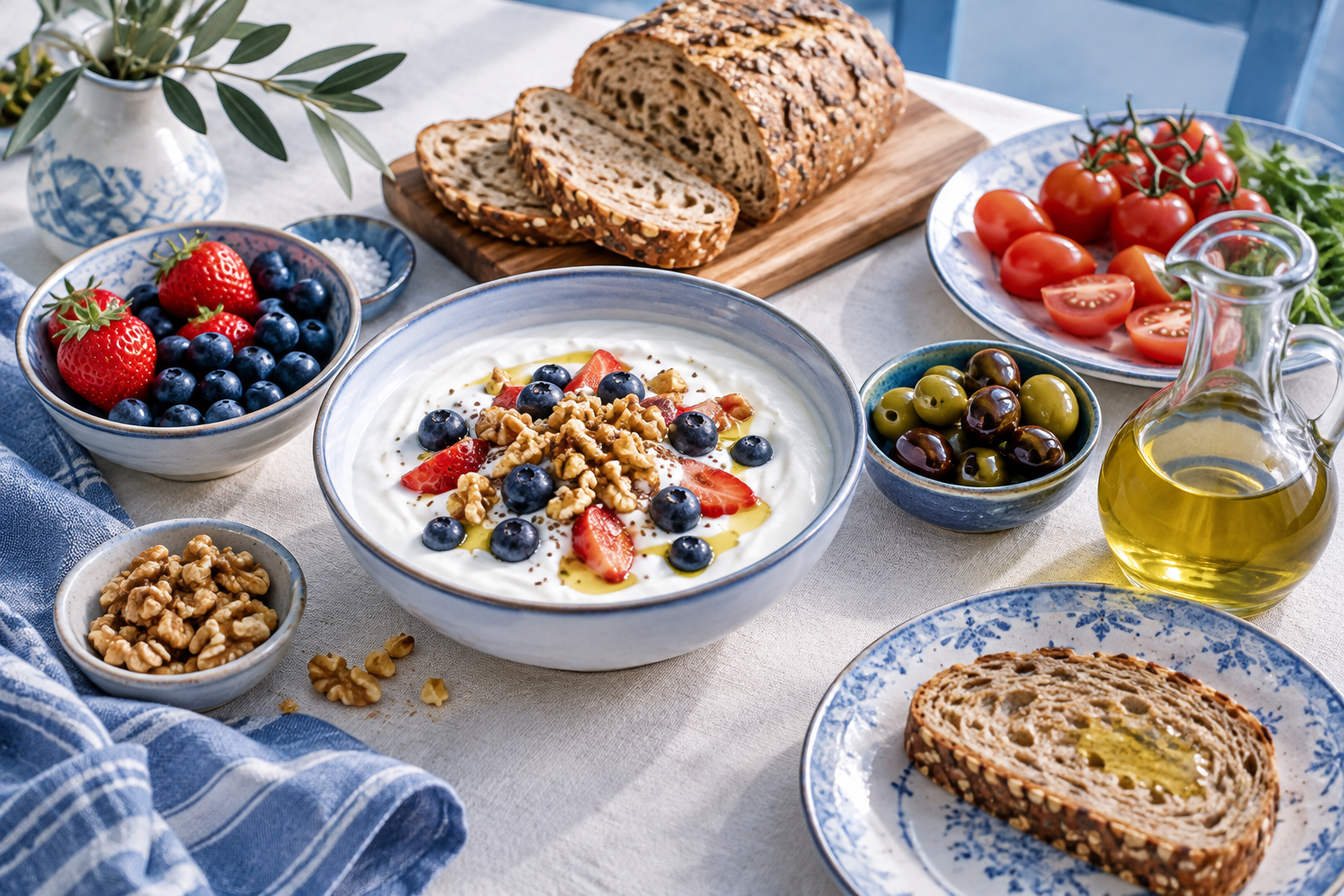
Breakfast Is A Pattern, Not A Pastry.
A useful Mediterranean-style breakfast combines minimally processed foods: plain yogurt or eggs, fruit or vegetables, nuts, whole-grain bread and water, coffee or tea. It does not need to be large, but it should be satisfying enough to reduce constant grazing.
- Include a protein food.
- Add produce rather than relying on juice.
- Choose whole grains more often than refined pastries.
Your Pantry Shapes Your Week.
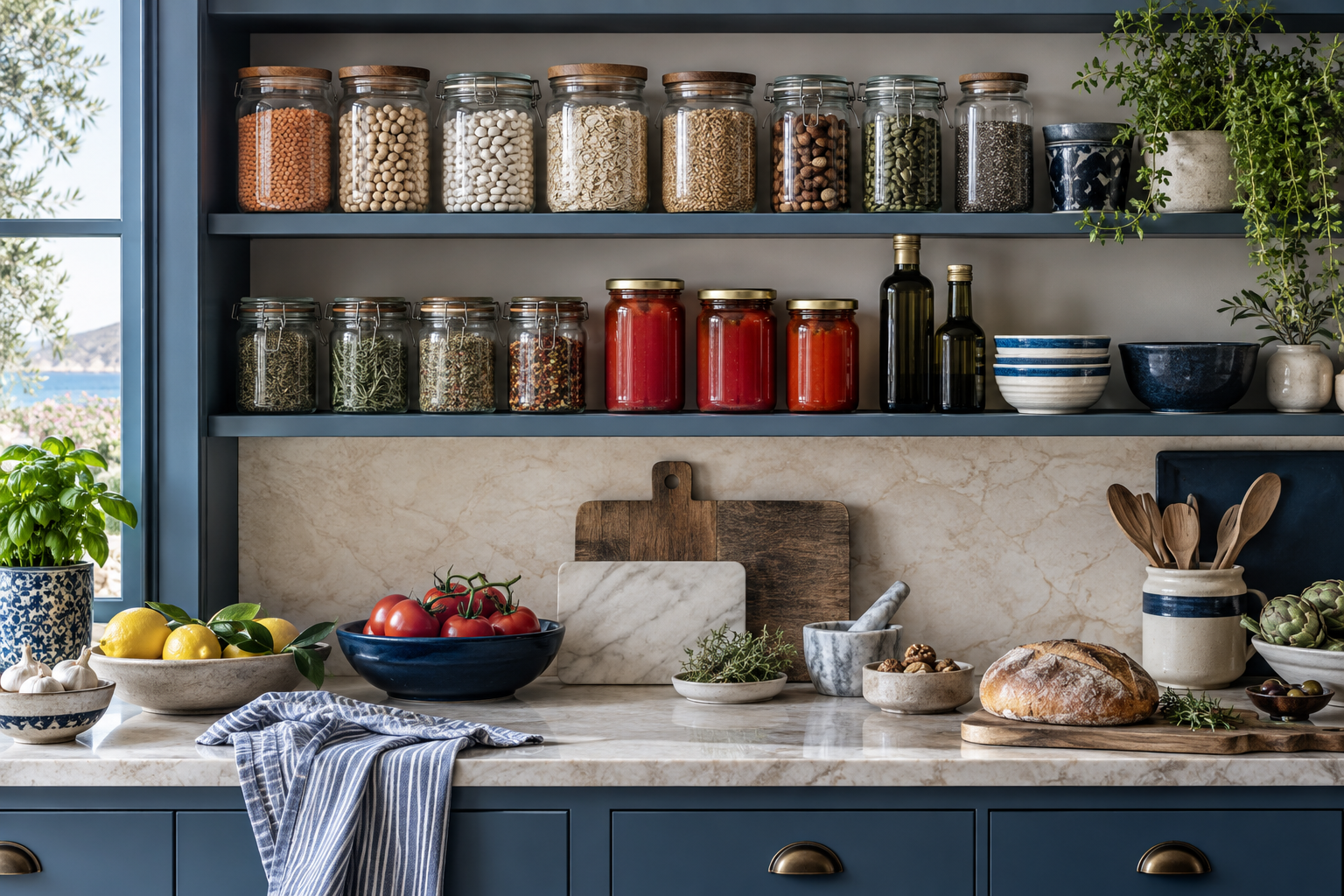
The Mediterranean pattern becomes practical when beans, lentils, whole grains, nuts, canned tomatoes, herbs and olive oil are already within reach. These staples turn fresh vegetables or fish into a complete meal without a complicated plan.
One Name. Several Mediterranean Traditions.
There is no single fixed menu. A major expert review describes a shared pattern across regions: vegetables, fruit, nuts, legumes and unprocessed grains are prominent; olive oil supplies much of the added fat; fish is regular; and meat is comparatively limited. The overall combination matters more than any single “superfood.”
Educational summary based on Trichopoulou et al., BMC Medicine (2014). Association is not a guarantee of an individual outcome.
Eat Together. Move Daily. Slow Down.
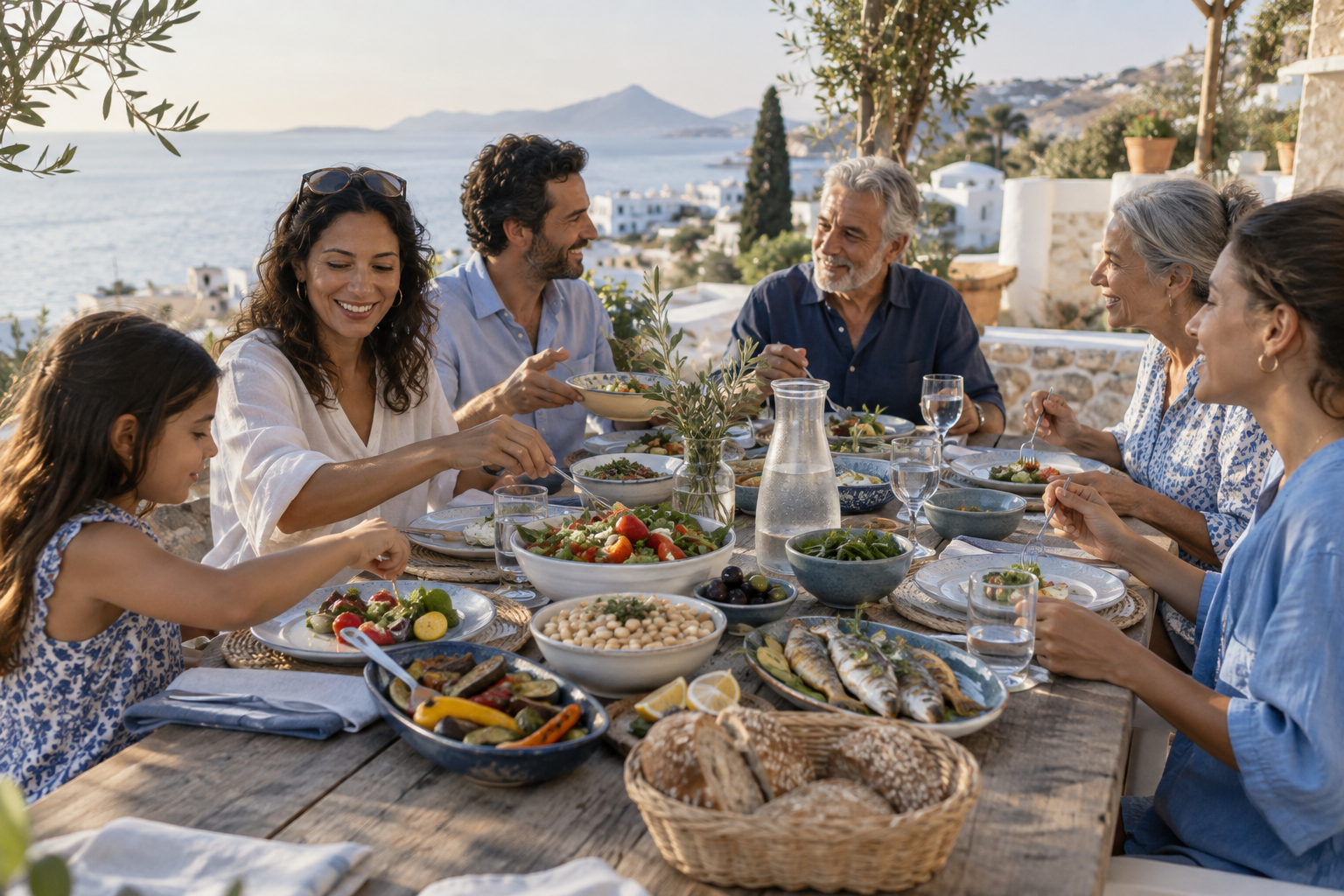
The Mediterranean way is also a lifestyle rhythm: cooking at home, eating without hurry, walking, sleeping consistently and making meals social. These habits cannot replace medical care, but they help turn a food list into a sustainable routine.
Use The Plate As A Flexible Guide.
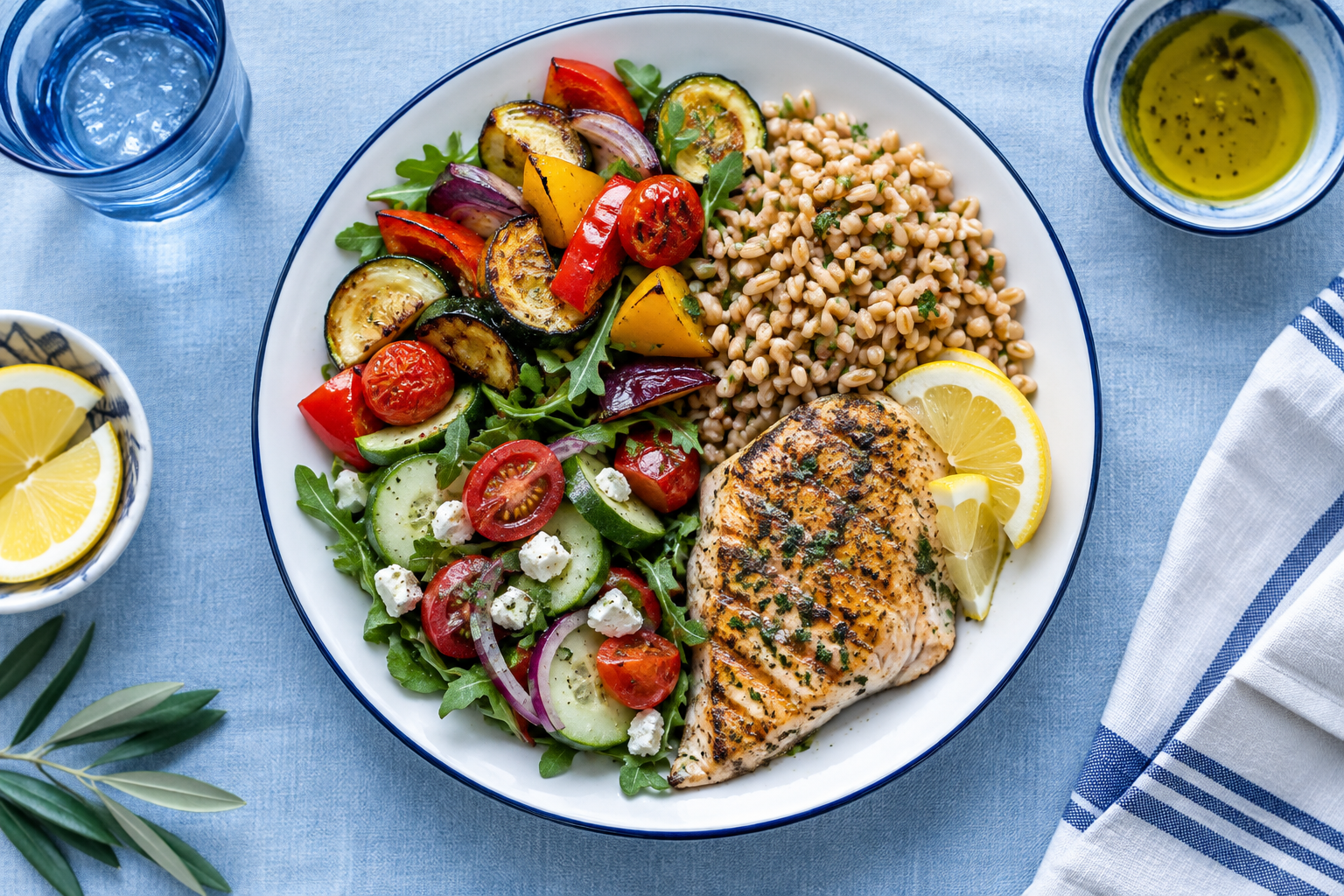
Start with plenty of vegetables, add a whole-grain or other minimally processed starch, then choose beans, fish, eggs or poultry. Finish with olive oil, herbs and water. Adjust portions to appetite, health needs and activity.
Your Next Meal Can Be Mediterranean.
No calorie counting. No forbidden-food drama. Just a clearer way to build a satisfying plate.