
Start Here
A practical introduction to Mediterranean-style eating, with an optional overnight eating pause.
Begin with one ordinary week
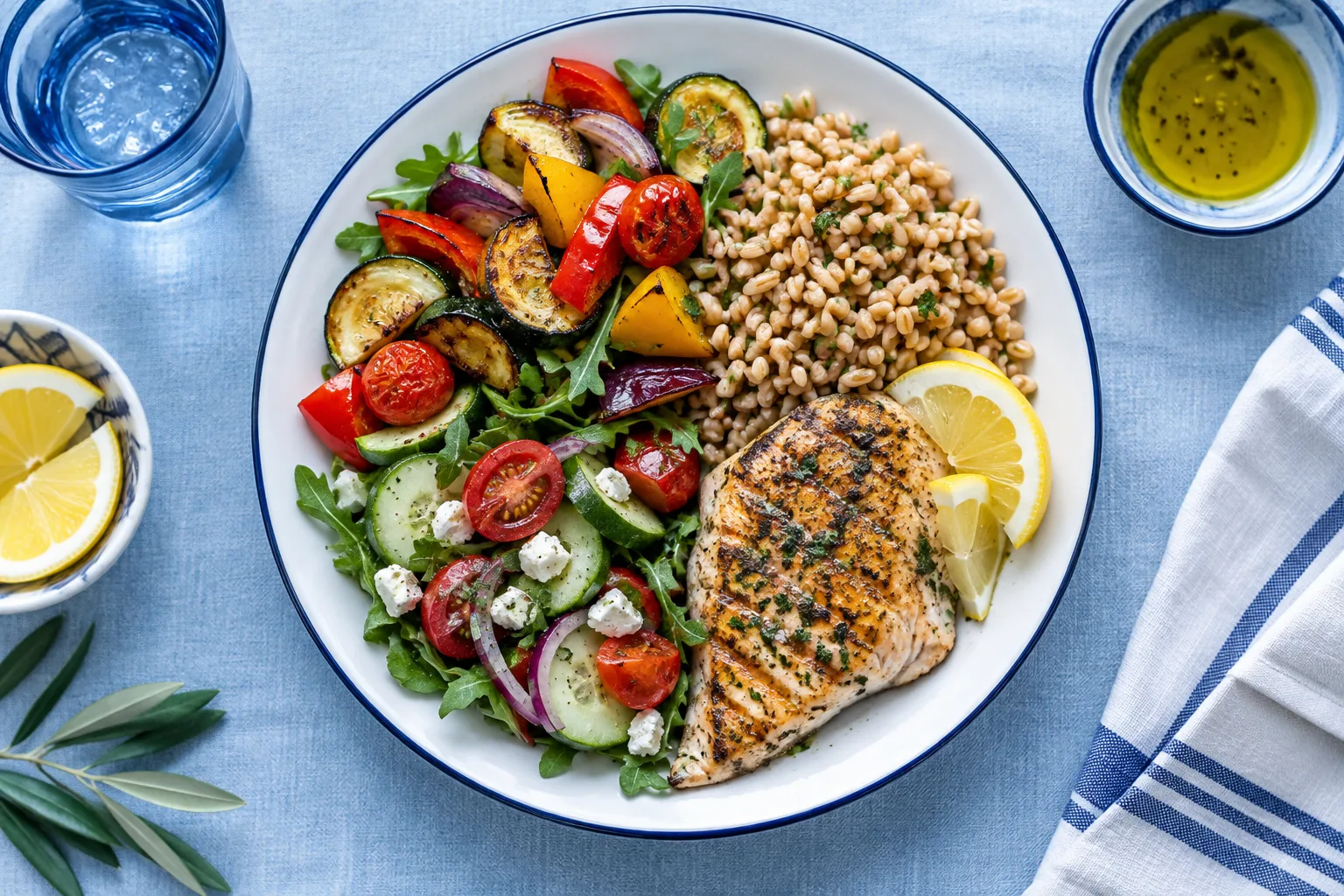
Build meals around vegetables, beans, whole grains, fruit, olive oil and a protein you enjoy. Choose simple changes that fit your household.
Make the plate visible
Add vegetables at lunch and dinner. A chopped salad, roasted tray or cooked greens all count.
Use the pantry
Keep cooked beans or lentils, whole grains and olive oil ready for quick meals.
Plan a gentle overnight pause
If it suits you, finish dinner at 7 p.m. and have breakfast at 7 a.m. This is a 12-hour overnight eating pause, with water available.
Where fasting fits
Some people prefer a regular overnight eating window alongside Mediterranean-style meals. It is optional. The quality and adequacy of what you eat still matter. Do not skip needed meals or use longer fasts to chase an alleged “autophagy hour.”
A practical first day
7 a.m. Oats with yogurt and fruit. 12:30 p.m. White-bean and roasted-pepper salad with whole-grain bread. 6:30 p.m. Lemon fish, tomatoes and a whole-grain side. Keep water available throughout the day; adapt timing and portions to your needs.
Fasting needs individual advice if you have diabetes, take glucose-lowering medicines, are pregnant or breastfeeding, are under 18, or have a history of disordered eating. The NIDDK explains medication-related risks.
Take the next step
Explore two full recipes in the free PDF preview.
Get your free preview
Receive 11 pages with two complete recipes, a practical guide and a sample day from the menu.
We use these details only to deliver the preview and related support. This does not subscribe you to marketing emails.